
Pre-Arrival Information
If you’re granted a visa, it’s essential to comply with all its conditions. Failing to meet these requirements may lead to the cancellation of your visa. These conditions include, but are not limited to:
- Satisfying attendance and course progress requirements while maintaining valid enrolment in your course.
- Only working if you’ve been granted permission as part of your visa.
- Maintaining approved Overseas Student Health Cover (OSHC) while you’re in Australia.
- Notifying us of your address in Australia and updating any changes within 7 days.
- Completing your course within the duration outlined in your Confirmation of Enrolment (CoE).
- Staying with your primary education provider for at least six months, unless you receive a letter of release allowing you to transfer to another institution.
Travel expenses to Australia aren’t included in your course fees, so you’ll need to organise and pay for your own travel. It’s a good idea to arrive in Melbourne at least two weeks before your course orientation to give yourself time to settle in.
Make sure to prepare a folder of important documents to bring with you, including:
- A valid passport with a student visa.
- Your Confirmation of Enrolment (eCoE).
- Insurance policies.
- Original or certified copies of key documents such as your birth certificate, medical records, and educational qualifications.
If you’re travelling with family, ensure their documents are included too. Keep all these important documents in your carry-on luggage. It’s also a good idea to leave copies with family members in case you need them later.
When you arrive in Australia, you’ll need to show your passport and incoming passenger card at a Customs and Immigration checkpoint. You may be asked a few questions about your stay before your passport is stamped and returned.
After clearing immigration, collect your luggage and check that nothing is missing or damaged. If there’s an issue, report it at the baggage services counter for assistance. Once you have your luggage, you’ll go through customs where it may be inspected. Australia has strict quarantine laws to prevent the entry of certain food and plant items. Declare any items you’re bringing in on the form provided during the flight. If customs officers determine an item is unsafe, it will be confiscated and destroyed. Failure to declare quarantine items or providing false information may result in fines or prosecution. All international mail is also screened by customs.
For further information, visit the Australian Quarantine and Inspection Service (AQIS) website.
Orange English College (OEC) can arrange airport transfers if required. Alternatively, you can travel to your accommodation by taxi or use public transport.
Before leaving home, provide your family, friends, and OEC in Australia with your flight details and the address where you’ll be staying. If these details change, inform them promptly. After arriving in Australia, let your family and friends know that you’ve arrived safely. For safety reasons, always make sure someone knows your whereabouts.
Australia uses the Australian Dollar (AUD). It’s best to exchange your money into Australian dollars before you arrive, but if you haven’t done so, you can exchange some at the airport. Once in Melbourne, you can also exchange money at banks or currency exchange offices. Keep in mind that banks are closed on weekends, and while airport exchanges are open, their rates may not be as favourable as those offered by banks. Avoid carrying large amounts of cash—just bring enough for the first few days, and arrange to have the rest transferred once you’re settled. The amount you’ll need depends on whether your accommodation has been paid in advance. Ensure you have enough to cover your first couple of weeks. For more information about managing your finances, visit Study in Australia: Money Matters.
OEC doesn’t provide accommodation but can refer you to homestay agencies. Most students prefer to stay in homestays or shared housing, which gives you the chance to improve your English and get to know Melbourne better. It’s recommended to inspect two or three properties before making a decision. If you sign a lease, your rights are protected by the Residential Tenancies Act.
Renting an apartment or flat can vary greatly in terms of cost and conditions, so it’s important to become familiar with the area. For longer stays, you’ll likely need to sign a lease, which involves paying a bond and arranging the move. Therefore, it’s a good idea to start with short-term accommodation until you’re familiar with Melbourne. For more details about renting and your rights, visit Housing Victoria: Rights and Responsibilities. If you need more advice, feel free to contact us.
If you plan to bring your family with you, they will also need visas and health insurance coverage. Family members include spouses (married or de facto) and children under 18 years of age. You’ll need to provide proof of family relationships with official documents like birth and marriage certificates. For more information, visit the Department of Home Affairs.
If you have children who need to attend childcare or school, be aware of the associated costs. For more information, visit Study Melbourne: Bring Your Family.



Excursions and/or Activities
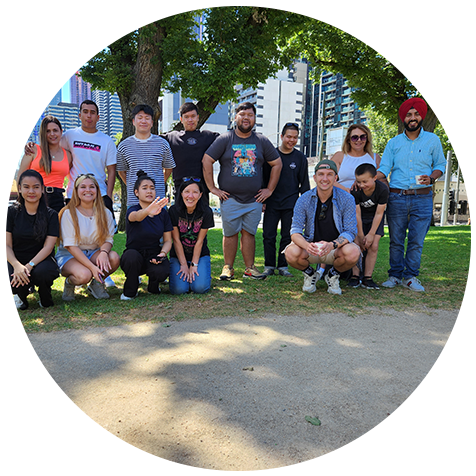
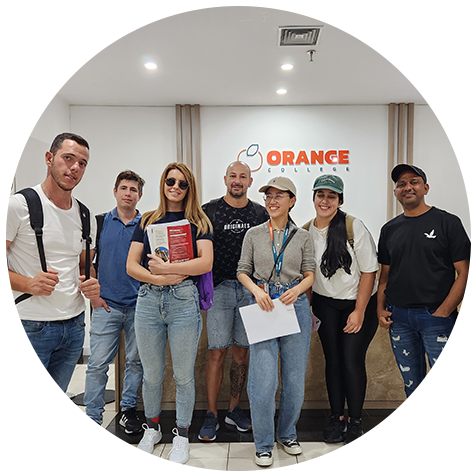
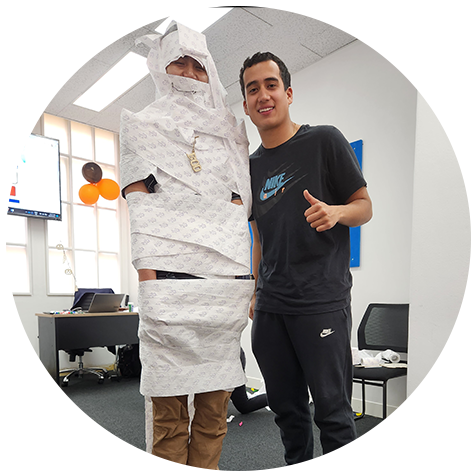
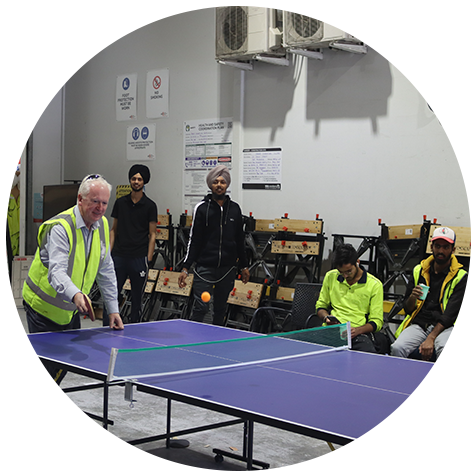
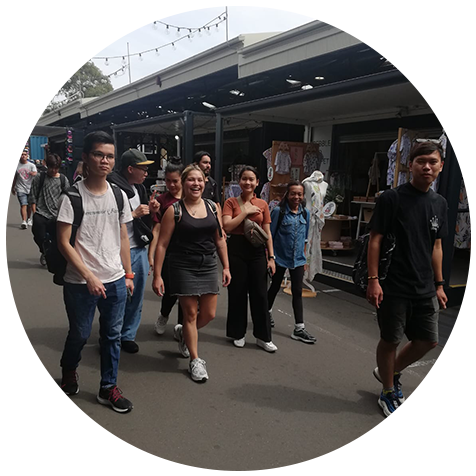
Orange English organises regular monthly excursions and activities. These are based on the curriculum and conducted on school days. Attendance is compulsory, as these excursions and activities are a part of the learning experience and process. These excursions and activities do not incur additional costs.
However, if an event or activity is extra-curricular, then attendance will be optional. Extra-curricular excursions and activities typically come at an extra cost to students and will not be scheduled on a school day.
Speaking and Pronunciation Club
In this club, our students come together to practice and refine their speaking abilities. Our experienced and dedicated teachers lead engaging sessions that focus on pronunciation and speaking English.

Accommodation partner